
Код товара: 5193108564


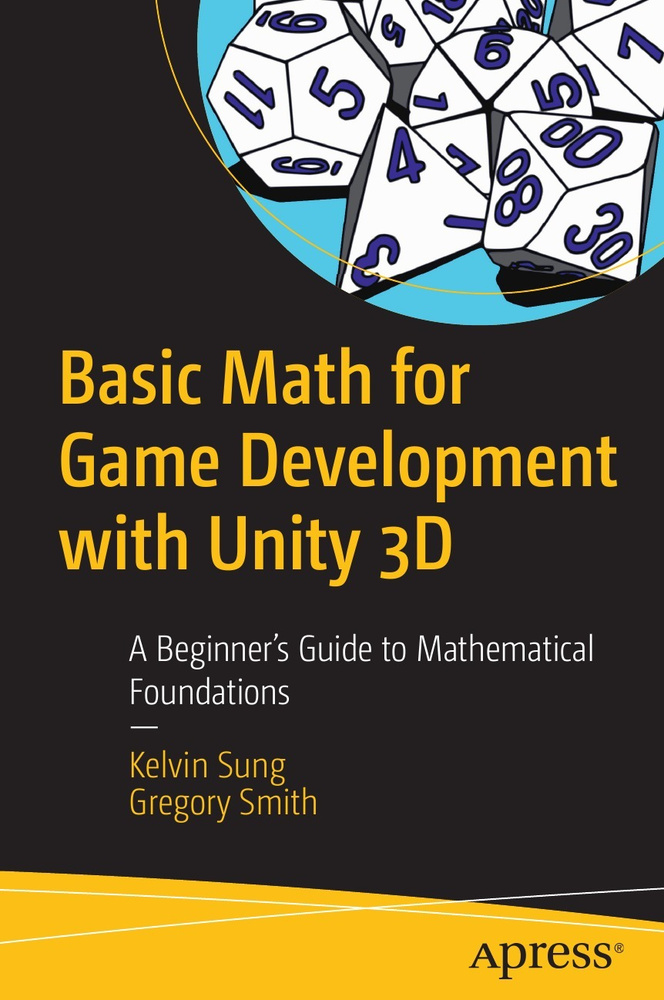
Basic Math for Game Development with Unity 3D. A Beginner's Guide to Mathematical Foundations
Тип книги:
Печать по требованию
О товаре
Перейти к описанию
Автор на обложке
Kelvin Sung; Gregory Smith
Год выпуска
2026
Тип бумаги в книге
Офсетная
Тип обложки
Мягкая обложка
Тип книги
Печать по требованию
О книге
Печатная книга «Basic Math for Game Development with Unity 3D. A Beginner's Guide to Mathematical Foundations» в мягкой обложке, язык - английский. В книге 424 страниц, она напечатана на белой офсетно
239 901 soʻm 337 038 soʻm
Магазин
Подписаться
Т8
Перейти
4.9
Чат
Заказы
50 K
О магазине
Часто задаваемые вопросы
Описание
Basic Math for Game Development with Unity 3D. A Beginner's Guide to Mathematical FoundationsПечатная книга «Basic Math for Game Development with Unity 3D. A Beginner's Guide to Mathematical Foundations» в мягкой обложке, язык - английский. В книге 424 страниц, она напечатана на белой офсетной бумаге плотностью 80 г/м². Формат издания — 152x229 мм. Все книги аккуратно упаковываем в прочный трехслойный сейф-пакет.
Chapter 1: Introduction and Learning Environment
Chapter Goal: Sets the context, describes prerequisite knowledge, discusses learning philosophy, guides to install, and presents a very brief tutorial on working with Unity.
Sub-topics
1. Philosophy, Background, and What You Will Learn
2. The Platform of Learning: Unity
3. C# Scripting: Modifying Behaviors in Unity
Chapter 2: Points and Bounds
Chapter Goal: Begins coverage with something very simple. Presents points, distances, and applications of these simple concepts
Sub-topics
1. Points and Distances
2. Colliders: Spheres
3. Ranges and Intervals
4. Colliders: Axis Aligned Boxes
5. Inside/Outside Tests
6. Limitations of the Colliders
Chapter 3: Vectors
Chapter Goal: Introduces vectors and applications of vectors.
Sub-topic
1. Vectors: Size and Direction
2. Velocity
3. Lines and Rays
4. Applications: Following Way Points, Patrolling, Proximity-Based Behavior
Chapter 4: Vector Dot Products
Chapter Goal: Introduces dot products and its applications.
Sub-topics
1. Dot Product Definition
2. Interpretation of Results: Direction and Projection
3. Point to Line Distance: Application in Proximity Tests
4. Line to Sphere Intersection: Application in Ray Casting
Chapter 5: Planes
Chapter Goal: Acquaints readers to plane equation and applications involving planes.
Sub-topics
1. Interpreting the Plane Equation
2. Plane Normal Vectors
3. Point to Plane Distance
4. Line to Plane Intersection: Application in Dropping Shadows
5. Reflecting a Vector: Application in Bouncing an Object
6. Applications: Projections, Direction Aware Behaviors
Chapter 6: Vector Cross Products
Chapter Goal: Defines cross products and its applications
Sub-topics
1. Cross Product Definition
2. Interpretation of Results: Area and Direction
3. Spanning of a Plane
4. Identifying Directions
5. Following and Chasing Behaviors
Chapter 7: Conclusion
Chapter Goal: Summarizes the book and learnings
Sub-topics
1. Summary and Context of Knowledge
2. What's Next and Why
3. Further Readings and References


- Артикул
- 5193108564
- Автор на обложке
- Kelvin Sung; Gregory Smith
- Год выпуска
- 2026
- Тип бумаги в книге
- Офсетная
- Тип обложки
- Мягкая обложка
- Тип книги
- Печать по требованию
- Язык издания
- Английский
- Количество страниц
- 424
- Размеры, мм
- 152x229
- Вес товара, г
- 670
- ISBN
- 9781484254424
- Возрастные ограничения
- 12+
Подборки товаров в категории Книги: Компьютерные технологии
Отзывы о товаре
4
Basic Math for Game Development with Unity 3D. A Beginner's Guide to Mathematical Foundations
Показать сначала:
новые и полезные
с высокой оценкой
В
Вячеслав Медноногов
30 августа 2023
Отзыв устарел
Качество бумаги:Нормальное
Внешнее оформление:Обычное
Подача материала и манера письма:Обычная
Достоинства
Книжка отличная, только вот пришла с обложкой от другой книги (см. видео)
Недостатки
Издержки самиздатовских технологий
Комментарий
Посмеялся ))
Вам помог этот отзыв?
Н
Николай М.
20 апреля 2023
Отзыв устарел
А
Александр П.
19 марта 2023
Отзыв устарел
Д
Даниил З.
28 сентября 2022
Отзыв устарел
Рейтинга пока нет. Он формируется на основе актуальных отзывов на заказанные и оплаченные товары
По мнению покупателей
Качество бумаги:
мнения разделились
Внешнее оформление:
обычное
Подача материала и манера письма:
обычная
Как правильно задавать вопросы?
Будьте вежливы и спрашивайте о товаре, на карточке которого вы находитесь
Если вы обнаружили ошибку в описанием товара, воспользуйтесь функцией
Как отвечать на вопросы?
Отвечать на вопросы могут клиенты, купившие товар, и официальные представители.
Выбрать «Лучший ответ» может только автор вопроса, если именно этот ответ ему помог.